Śrī Utthāna Ekādaśī – The First Day of Bhīṣma Pañcaka
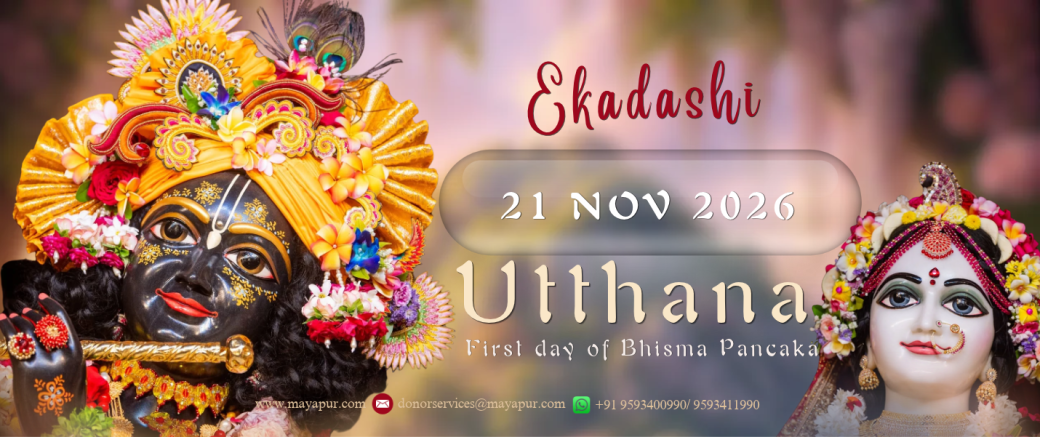
The auspicious awakening of Lord Śrī Hari and the beginning of five sacred days of intensified devotional service.
Śrī Utthāna Ekādaśī, also known as Prabodhini Ekādaśī or Devotthāna Ekādaśī, is one of the most auspicious Ekādaśīs observed by devotees of Lord Śrī Krishna. It falls on the eleventh day (Ekādaśī) of the bright fortnight (Śukla Pakṣa) of the month of Kārtika. This sacred day marks the symbolic awakening of Lord Viṣṇu from His divine four-month period of cosmic rest, known as Cāturmāsya.
The word Utthāna means awakening or rising, while Ekādaśī refers to the eleventh lunar day. Devotees observe a sacred fast, engage in chanting the holy names, worship the Lord and offer prayers, seeking His divine mercy. Utthāna Ekādaśī is also particularly significant because it marks the beginning of Bhīṣma Pañcaka, a five-day period of intensified devotional observances concluding on the full moon day of Kārtika.
The Divine Awakening of Lord Viṣṇu
According to Vedic tradition, Lord Śrī Viṣṇu enters His divine resting pastime on Śayana Ekādaśī, which occurs during the month of Āṣāḍha. He rests upon Ananta Śeṣa in the ocean of milk, and this period continues until Utthāna Ekādaśī in Kārtika.
This four-month period is known as Cāturmāsya, during which devotees undertake special vows and increase their spiritual practices. On Utthāna Ekādaśī, Lord Viṣṇu awakens from His divine rest, marking an auspicious occasion for renewed devotional activity.
The awakening of the Lord is not an ordinary event, for the Supreme Personality of Godhead is eternally transcendental and never subject to material sleep. Rather, it is one of His divine pastimes, celebrated by devotees with joy, prayers and elaborate worship.
Temples observe this occasion with special Deity worship, kīrtana, offerings and celebrations. Devotees welcome the Lord's awakening by singing His glories and praying for the opportunity to serve Him with greater devotion.
The Significance of Bhīṣma Pañcaka
Utthāna Ekādaśī marks the beginning of Bhīṣma Pañcaka, also known as Viṣṇu Pañcaka. It consists of the final five days of the sacred month of Kārtika, beginning on Utthāna Ekādaśī and concluding on Kārtika Pūrṇimā.
These five days are especially significant because they are associated with the devotion and surrender of Śrī Bhīṣmadeva, the great devotee and warrior of the Mahābhārata.
Bhīṣmadeva was a celebrated devotee of Lord Krishna, renowned for his extraordinary character, vows and unwavering devotion. During the Battle of Kurukṣetra, he fought on the side of the Kauravas, yet his heart remained completely devoted to Krishna.
After the battle, Bhīṣmadeva lay upon a bed of arrows, waiting for the most auspicious moment to leave his mortal body. Lord Krishna personally visited him, accompanied by the Pāṇḍavas.
In his final moments, Bhīṣmadeva glorified Lord Krishna through beautiful prayers, remembering His transcendental form and activities. His extraordinary prayers are recorded in the Śrīmad-Bhāgavatam, particularly in the First Canto, Chapter Nine.
Bhīṣma Pañcaka is observed in remembrance of this great devotee and his deep attachment to the Supreme Lord. During these five days, devotees undertake special vows, fasting and worship to please Lord Krishna.
Observing the Bhīṣma Pañcaka Vow
Bhīṣma Pañcaka is considered a particularly sacred period for increasing one's devotional activities. Devotees observe different levels of fasting according to their capacity and follow prescribed devotional practices.
Traditional observances may include:
-
Fasting from grains and beans, following Ekādaśī regulations.
-
Offering special worship to Lord Krishna and Lord Viṣṇu.
-
Chanting the Hare Krishna Mahāmantra and reading scriptures.
-
Offering flowers, Tulasi leaves and lamps to the Lord.
-
Hearing the glories of Bhīṣmadeva and remembering his prayers.
-
Observing additional dietary restrictions as prescribed for the five-day vow.
Some devotees undertake more austere forms of fasting, while others follow simpler observances according to their health and circumstances. The essential purpose is to increase remembrance of the Lord and engage in sincere devotional service.
The Spiritual Importance of Fasting on Utthāna Ekādaśī
Ekādaśī is especially dear to Lord Krishna. Fasting on this sacred day is an opportunity to withdraw the mind from material distractions and focus more deeply on spiritual life.
The practice of fasting is not merely abstaining from food. Its deeper purpose is to dedicate more time to chanting, hearing and remembering the Supreme Lord.
The observance of Utthāna Ekādaśī inspires devotees to:
-
Increase devotion: Spend more time chanting the holy names and remembering Lord Krishna.
-
Purify consciousness: Reduce material distractions and cultivate spiritual awareness.
-
Develop self-discipline: Practise restraint and strengthen one's commitment to devotional life.
-
Seek the Lord's mercy: Offer prayers and devotional service with sincerity and humility.
-
Prepare for Bhīṣma Pañcaka: Begin five days of intensified spiritual observance during the concluding period of Kārtika.
Concluding the Sacred Month of Kārtika
Utthāna Ekādaśī marks an important transition in the sacred month of Kārtika. As devotees approach the conclusion of Dāmodara-māsa, this day provides an opportunity to renew their spiritual commitments and intensify their devotion.
The following five days of Bhīṣma Pañcaka offer a special opportunity to remember the extraordinary devotion of Bhīṣmadeva and follow his example of unwavering attachment to Lord Krishna.
May this sacred Utthāna Ekādaśī inspire us to deepen our devotion, surrender our hearts to the Supreme Lord and dedicate our lives to His loving service.
May Lord Śrī Hari awaken our hearts to pure devotion, and may the blessings of Śrī Bhīṣmadeva guide us on the path of unalloyed bhakti.
Jaya Śrī Krishna! Jaya Bhīṣmadeva! Hare Krishna!
Posted 20 hours ago