The Last Day of the Fourth Month of Cāturmāsya
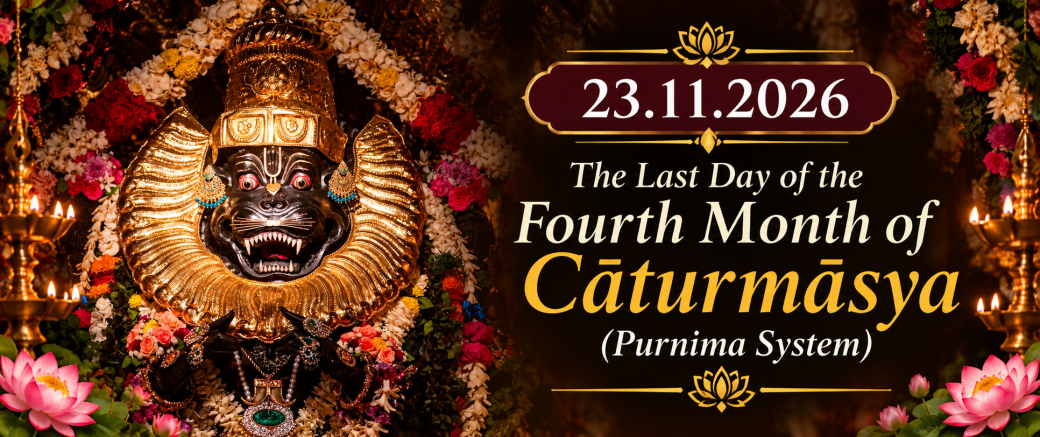
Completing four sacred months of austerity, devotion and spiritual discipline in the service of Lord Śrī Krishna.
Cāturmāsya is a sacred four-month period dedicated to increased devotional practices, self-discipline and spiritual purification. Observed during the rainy season, this auspicious period begins on Śayana Ekādaśī in the month of Āṣāḍha and concludes on Utthāna Ekādaśī in the month of Kārtika. The final day of the fourth month marks the completion of this special period of vows and devotional observances.
The word Cāturmāsya means 'four months'. During this time, devotees traditionally undertake various vows, regulate their eating habits and increase their engagement in devotional service. The purpose is not simply to practise austerity but to dedicate more time and attention to hearing, chanting and remembering the Supreme Lord.
The Significance of Cāturmāsya
Cāturmāsya is especially important for Vaiṣṇavas because it provides an opportunity to strengthen one's spiritual practices and cultivate a deeper relationship with Lord Krishna.
Traditionally, this period is associated with Lord Viṣṇu's divine resting pastime, beginning on Śayana Ekādaśī and ending on Utthāna Ekādaśī. Although the Supreme Lord is eternally transcendental, His resting and awakening are celebrated as divine pastimes by devotees.
Throughout these four months, devotees undertake special vows and make conscious efforts to reduce material distractions. They may observe dietary restrictions, increase their chanting of the Hare Krishna Mahāmantra, read sacred scriptures, visit holy places and engage in additional service to the Lord.
Śrīla Prabhupāda encouraged devotees to observe Cāturmāsya according to the Vaiṣṇava tradition, understanding that regulated practices help one advance in Krishna consciousness.
Each month of Cāturmāsya has its own traditional dietary observance:
- First month – Śrāvaṇa: Abstaining from leafy vegetables.
- Second month – Bhādrapada: Abstaining from yoghurt.
- Third month – Āśvina: Abstaining from milk.
- Fourth month – Kārtika: Abstaining from urad dal and other prescribed foods according to the particular vow followed.
These observances may vary according to the specific tradition and the vow undertaken. Devotees should follow the instructions of their spiritual authorities when observing Cāturmāsya.
Completing the Fourth Month
The final day of the fourth month is an important occasion for devotees who have maintained Cāturmāsya vows. It marks the completion of a period of discipline, sacrifice and increased devotional activity.
However, the conclusion of the vows should not be viewed merely as the end of dietary restrictions. The deeper purpose is to carry the spiritual determination developed during these four months into everyday life.
The habits of chanting, hearing, serving the Vaiṣṇavas and remembering Krishna should continue beyond the completion of Cāturmāsya.
The month of Kārtika is particularly dear to Lord Krishna and is celebrated as Dāmodara-māsa. Devotees observe this month by offering lamps to Lord Dāmodara, singing the Dāmodarāṣṭaka prayers, chanting the holy names and remembering Krishna's childhood pastimes.
The Spiritual Lessons of Cāturmāsya
The observance of Cāturmāsya teaches devotees several important principles of spiritual life:
Self-discipline: Regulating food and daily habits helps develop control over the senses and encourages a more focused spiritual life.
Devotional determination: Maintaining vows for four months strengthens one's commitment to devotional service.
Remembrance of Krishna: Additional chanting, reading and hearing about the Lord help keep the mind engaged in spiritual activities.
Simplicity and renunciation: Reducing unnecessary material enjoyment creates more opportunities for serving the Supreme Lord.
Gratitude and surrender: Completing the vows inspires devotees to offer gratitude to the Lord, the spiritual master and the Vaiṣṇavas for their guidance and mercy.
Carrying the Spirit of Cāturmāsya Forward
As the fourth month of Cāturmāsya comes to an end, devotees have an opportunity to reflect upon their spiritual journey over these four months. Every vow undertaken, every prayer offered and every moment spent in remembering Krishna becomes an opportunity to deepen one's devotion.
The real success of Cāturmāsya is not simply completing a particular austerity but developing a stronger desire to serve the Lord with sincerity and humility.
May the devotional determination cultivated during these sacred four months remain firmly within our hearts. Let us continue to take shelter of the holy names and dedicate our lives to the loving service of Śrī Śrī Rādhā-Krishna.
Hare Krishna!
Posted 13 hours ago